Can standing on one foot for 10 seconds tell you how long you'll live?
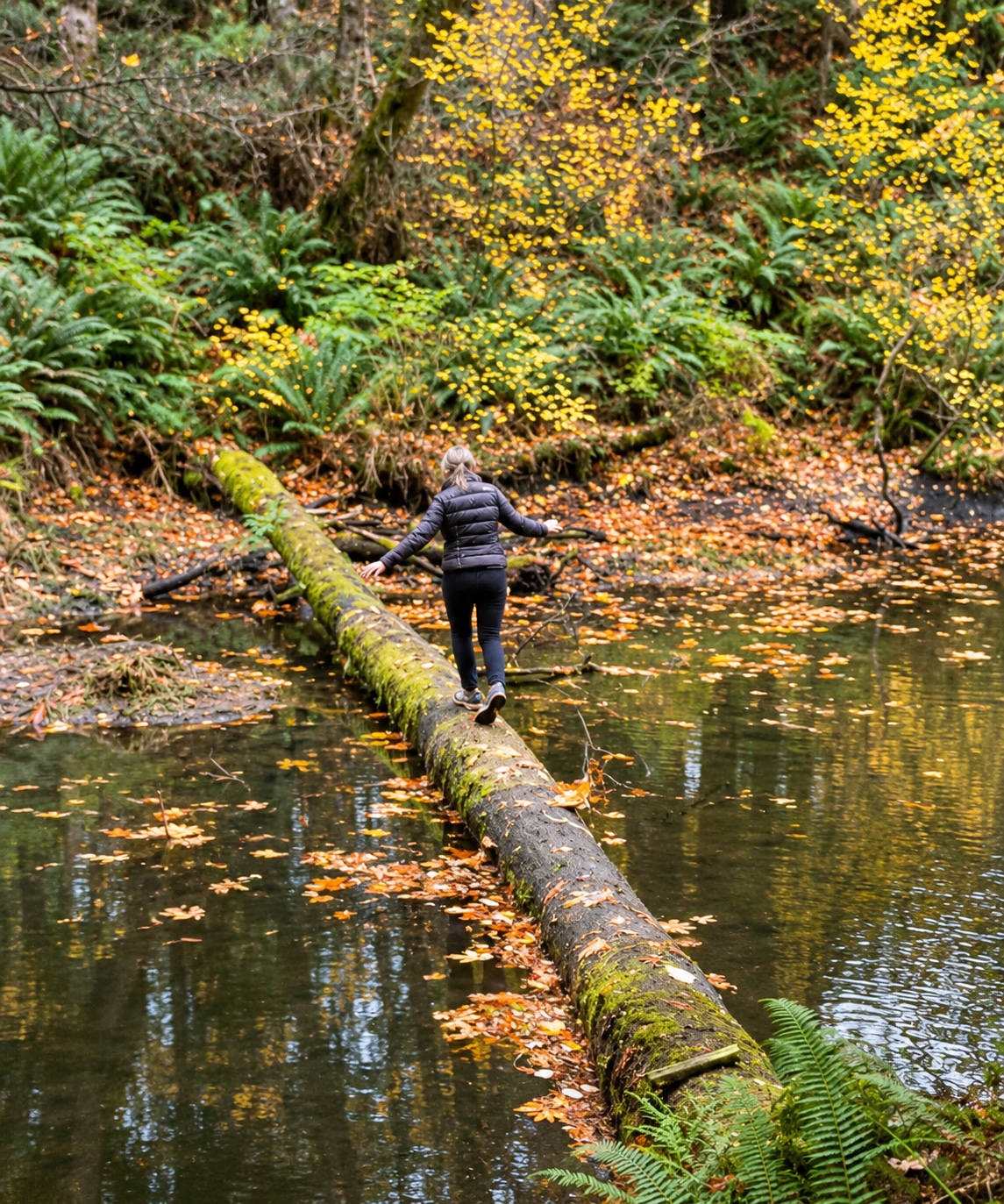
It sounds almost too simple to be true. Could standing on one foot for just 10 seconds tell us something about how long we're likely to live?
According to a fascinating study published in 2022, it just might.
Researchers studied 1,702 adults between the ages of 51 and 75. During a median follow-up of seven years, people who couldn't stand on one foot for 10 seconds had a higher rate of death than those who could. After accounting for several factors including age, sex, and health conditions, the group unable to complete the test had an approximately 84% higher rate of death during follow-up.
That's a remarkable association for something as simple as standing on one foot. But before we all start timing ourselves, let's look at what it actually tells us.
Why would balance be connected to longevity?
Balance isn't just about staying upright. It's the result of several systems in our bodies working together: our brain, nervous system, vision, inner ears, and muscles.
When we stand on one foot, we challenge all these systems at once. Our brain processes information about where we are in space. Our muscles make tiny adjustments to keep us steady. Our nervous system coordinates those responses quickly and accurately.
As we age, some of these systems may become less efficient. Muscle strength can decline, reaction times can slow, and our sense of body position may change. And our balance may suffer because we don't challenge it as often.
Does poor balance mean a shorter life?
Not necessarily. The researchers found a correlation, not proof that poor balance causes an earlier death.
People who struggle with balance may also have other health conditions or changes in physical function that affect their overall health. Poor balance may be a signal of something happening elsewhere in the body rather than a direct cause of a shorter life.
Failing the test certainly doesn't predict how long any one person will live.
Can you improve your balance?
Here's where I find the research encouraging. While we can't control every change that comes with aging, balance is something we can work on throughout our lives.
Walking on different surfaces, practicing controlled weight shifts, stepping over obstacles, strengthening our legs and hips, and standing on one foot with appropriate support can all help challenge the systems responsible for balance.
The key is to find activities that are safe for your current abilities and gradually increase the challenge. Like building muscle strength, improving balance takes practice and consistency.
We don't yet know whether improving your score on this test directly increases life expectancy. But maintaining strength, mobility, and balance can help us stay active and independent.
Want to try the 10-second balance test?
In the study, participants were asked to stand on one foot for 10 seconds, with the raised foot placed against the back of the standing leg, arms at their sides, and eyes looking straight ahead. They were allowed up to three attempts on either foot.
If you're curious, start beside a sturdy countertop, with someone nearby if you're at risk of falling. Don't let go unless you're confident you can do so safely. If you have significant balance problems, work with a qualified professional instead.
And remember: your result isn't a diagnosis or a prediction of your lifespan. It's one way to become more aware of your current abilities.
A final thought
What interests me most about this study isn't the possibility of predicting how long we'll live. It's the reminder that something as simple as standing on one foot involves an extraordinary amount of coordination throughout our bodies.
Rather than viewing balance as something we inevitably lose with age, I'd rather think of it as something we can continue to practice, challenge, and improve.
Because ultimately, the goal isn't just to live longer. It's to keep moving confidently and enjoying the life we're living.
Research reference
Araújo CGS et al. (2022). Successful 10-second one-legged stance performance predicts survival in middle-aged and older individuals. British Journal of Sports Medicine, 56, 975–980. Read the study.
Want to learn more? What is balance, and why does it decline as we age?